
Understanding the risks documented in Part 2 naturally raises a question that matters more than the risks themselves: can you have the metabolic benefits of GLP-1 agonists without the muscle cost? The answer is yes, but only with a deliberate, structured protocol. This is what that protocol looks like.
The data from the 72-week Mounjaro trial was unambiguous: on standard prescribed doses, participants lost an average of six kilograms of lean mass, equivalent to a decade of accelerated ageing in a single treatment cycle. But the same data contained a second finding, one that received far less attention. In the group that combined GLP-1 therapy with resistance training, lean mass was preserved entirely, and fat loss more than doubled compared to the drug-alone arm.
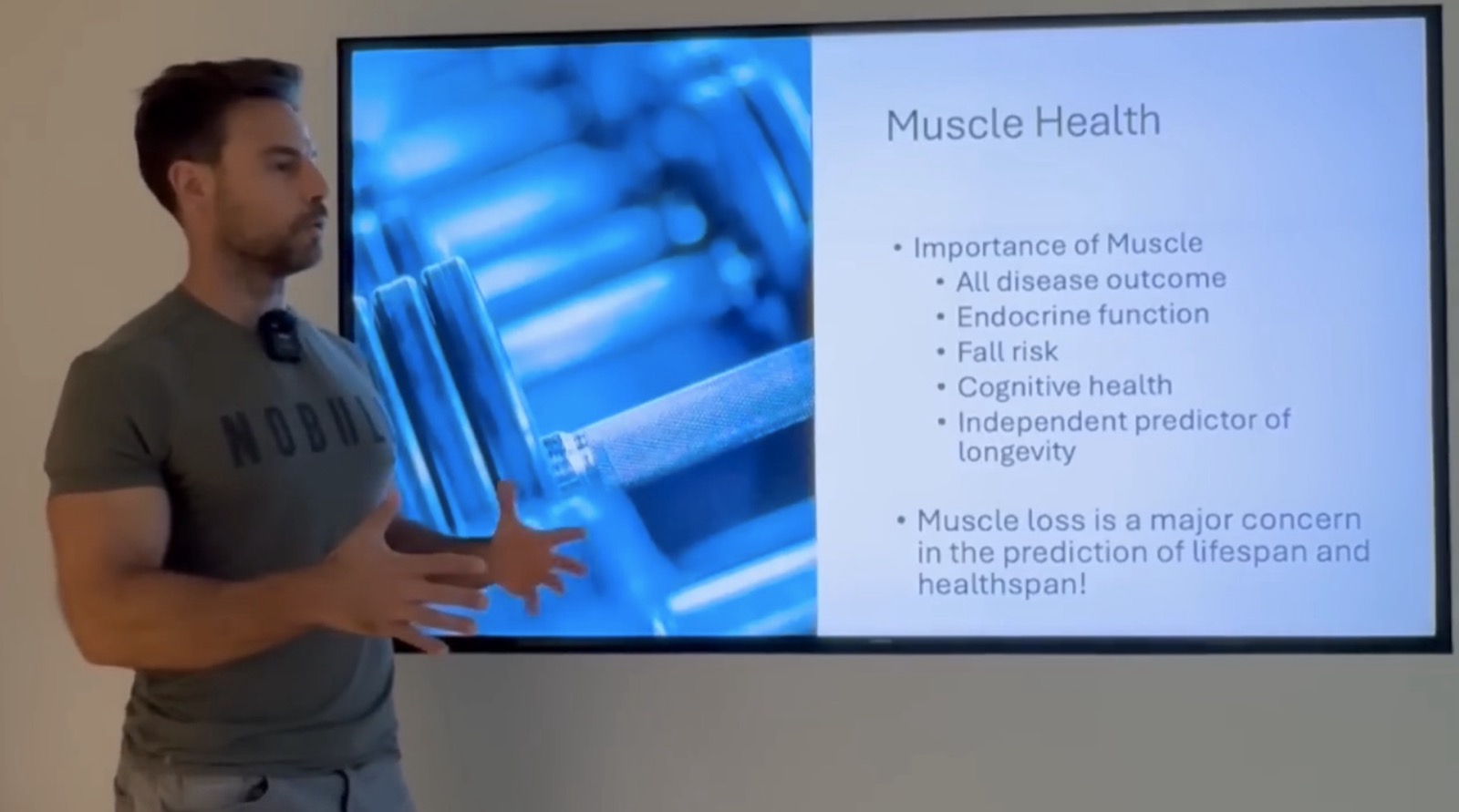
This is the critical distinction that separates responsible GLP-1 use from the wave of rapid-loss prescribing that has defined the category's entry into mainstream medicine. The drug is not the problem. The protocol surrounding it is what determines whether you emerge leaner and healthier, or lighter but metabolically diminished.
Resistance Training: Non-Negotiable
Dr Coetsee is direct on this point in a way that leaves no room for interpretation: resistance training is not one option among several. It is the single non-negotiable countermeasure to GLP-1-induced muscle loss, and no other form of exercise, not cardio, not yoga, not walking, produces the same outcome. The mechanism is mechanical tension. When muscle fibres are subjected to load that challenges their capacity, the body is given an unambiguous signal to preserve and build those fibres. GLP-1-driven caloric restriction suppresses that signal. Resistance training reinstates it.
The minimum effective dose, supported by the trial data, is three to four sessions per week of hypertrophy-focused training, compound movements, progressive overload, and effort that approaches muscular failure on the working sets. Half-hearted effort does not produce the mechanical tension required. The training stimulus must be sufficient to override the catabolic environment that aggressive caloric restriction creates.
It's not like crazy training. You don't need to be a competitive athlete. But it has to be resistance training, specifically. Two or three times a week going to the gym, done properly, is enough to mitigate lean muscle loss entirely. That changes everything about what these drugs can do for your long-term health.
The mechanistic picture is more detailed than simply "exercise preserves muscle." Research in the context of GLP-1 use shows that resistance training, combined with these compounds, produces a potent fat-burning environment that neither element achieves alone. In the trial data Dr Coetsee presents, the combination of resistance training and GLP-1 therapy produced nearly four times the fat loss of training without the drug, while preserving lean mass at a level equivalent to the exercise-only group. The drug amplifies the effect of the training. The training protects against the drug's primary liability.
Progressive Overload: The Operating Principle
Progressive overload, the systematic increase of training stimulus over time, is the mechanism by which resistance training produces lasting adaptation. It is not enough to maintain the same weights across the same sets indefinitely. The body adapts to a given stimulus and then stops responding to it. To continue generating the mechanical tension required for muscle protein synthesis, the challenge must increase: more weight, more volume, more density, or more proximity to failure.
For GLP-1 users specifically, proximity to failure matters. Research on hypertrophy consistently shows that sets taken to, or within one to two repetitions of, muscular failure generate significantly greater anabolic signalling than sub-maximal efforts. When caloric intake is suppressed by GLP-1 activity, the anabolic signal from training becomes the primary driver of muscle protein synthesis, which means the quality of that signal must be high.
Protein: The 1.6g/kg Minimum
The appetite suppression produced by GLP-1 agonists is profound, which is precisely why protein intake requires active management rather than intuitive eating. On standard doses, patients frequently find themselves consuming 1,000-1,200 calories per day with no sensation of hunger. At that caloric level, eating to satiety provides nothing close to adequate protein for muscle preservation. The appetite suppression that makes GLP-1s effective at producing a caloric deficit is also the mechanism by which protein intake collapses if it is not deliberately prioritised.
The evidence-based target is 1.6-2.2 grams of protein per kilogram of lean body mass daily, not total body weight. For an 85kg individual with 30% body fat, this means calculating against approximately 60kg of lean mass, yielding a daily target of 96-132 grams. This distinction matters because using total body weight inflates the target for obese patients while obscuring the actual requirement.
Protein timing also matters. Distributing intake across three to four meals, rather than concentrating it in one or two, maximises muscle protein synthesis by repeatedly clearing the leucine threshold (~2.5g of leucine per meal) required to trigger a synthetic response. A single large protein meal does not produce the same anabolic stimulus as three moderate ones.
The leucine threshold is a concept that deserves specific attention in this context. Leucine, an essential branched-chain amino acid, functions as the primary trigger for muscle protein synthesis at the ribosomal level. Each meal needs to contain sufficient leucine to clear this threshold and initiate a synthetic response. At approximately 2.5 grams of leucine per meal, the threshold is reliably met. Animal proteins, meat, fish, eggs, dairy, tend to be leucine-dense. Plant proteins generally require higher total quantities to deliver an equivalent leucine load.
Creatine: The Most Studied Supplement in History
If resistance training is the structural countermeasure to GLP-1-induced muscle loss, and protein is the substrate, creatine monohydrate is the third pillar, a well-evidenced, low-risk intervention with specific mechanisms relevant to patients in a GLP-1-driven caloric deficit.
Creatine monohydrate is commonly included alongside GLP-1 therapy. The rationale is grounded in several converging mechanisms. Dosage and administration are determined and supervised by your prescribing clinician. Creatine increases phosphocreatine availability within muscle cells, accelerating ATP regeneration during high-intensity effort, which translates directly to the ability to maintain training quality when caloric intake is low. It also promotes osmotic water retention within muscle tissue, which preserves cell volume and contributes to the anabolic signalling environment.
One important clarification: not all forms of creatine carry the same evidence base. Creatine monohydrate, the original, most extensively studied form, has decades of human trial data supporting its safety and efficacy. More expensive proprietary forms (creatine HCl, buffered creatine, creatine ethyl ester) do not have superior evidence, and in several comparative trials have underperformed monohydrate. A loading phase is not required for long-term supplementation. Consistent daily use achieves full muscle saturation over several weeks; the appropriate amount for your protocol is a matter to discuss with your clinician.
An additional dimension worth noting: creatine has emerging evidence for cognitive benefits, improved working memory, processing speed, and resistance to mental fatigue, that may be particularly relevant for GLP-1 users who experience brain fog during periods of caloric restriction. The cognitive effects are hypothesised to involve the same ATP-regeneration mechanism operating in neurons rather than muscle cells.
Monitoring & Dose Adjustment
One of the most consequential failings in current GLP-1 prescribing practice is the absence of body composition monitoring. Most practitioners track total body weight, and interpret weight loss as success. This approach misses everything that matters. Scale weight does not distinguish between fat loss and muscle loss. A patient who has lost 12kg could have lost 10kg of fat and 2kg of lean mass (an excellent outcome) or 7kg of fat and 5kg of lean mass (a concerning one). Without body composition measurement, these patients are indistinguishable.
Our monitoring protocol is structured around DEXA (dual-energy X-ray absorptiometry) scanning, the gold standard for body composition assessment. The schedule: baseline before initiating therapy, then at three months, six months, and twelve months. Each scan provides absolute lean mass, fat mass, and regional distribution. The data from these scans, not scale weight, should drive dose adjustment decisions.
The clinical goal is a rate of fat loss that outpaces lean mass loss by a wide margin. Rapid total weight loss at the cost of lean tissue achieves a metabolically inferior outcome to slower, composition-targeted loss that preserves muscle. Ten percent lean mass loss equates to approximately a decade of accelerated ageing, a risk that should inform every dose decision.
Practical Monitoring Biomarkers
Between DEXA scans, several practical markers provide useful interim signals. Hand grip strength, measured with a dynamometer, is a validated proxy for overall lean mass and has been used as an outcome measure in GLP-1 trials. A meaningful decline in grip strength between assessments, in the absence of injury, suggests lean mass loss that warrants attention. Body weight alone is an unreliable indicator in either direction.
Biochemically, monitoring fasting insulin, HbA1c, and lipid panel at baseline and at six months provides the metabolic picture. For patients with any personal or family history of thyroid pathology, baseline calcitonin measurement is appropriate given the rodent C-cell hyperplasia signal discussed in Part 2, not because the human risk is established, but because baseline data provides context for any future findings. Gallbladder ultrasound is reasonable for patients at elevated gallstone risk (prior obesity, female sex, rapid prior weight cycling) before initiating therapy.
The Next Generation of GLP-1s
The pharmacological landscape is moving rapidly, and the compounds in late-stage development address several of the limitations of current agents, including, directly, the muscle mass problem.
CagriSema (Novo Nordisk) is the most advanced next-generation compound. It combines semaglutide, the active ingredient in Ozempic, with cagrilintide, a long-acting amylin analogue. Amylin is a pancreatic hormone that works synergistically with GLP-1 to regulate satiety and glucose metabolism, but through distinct receptor pathways. Phase 3 trial data (REDEFINE 1, 2025) showed body weight reductions exceeding 22% at 68 weeks, surpassing both semaglutide and tirzepatide in matched comparisons. The amylin component appears to produce a more balanced appetite regulation profile with potentially less severe gastric side effects. CagriSema is an investigational compound and is not licensed for clinical use in the UK at the time of writing.
Retatrutide represents the next level of receptor complexity: a triple agonist targeting GLP-1, GIP, and glucagon receptors simultaneously. Phase 2 data published in the New England Journal of Medicine showed body weight reductions of up to 24.2% at 48 weeks, the highest figures in the literature to date. The glucagon receptor component is particularly relevant for muscle: glucagon has direct effects on hepatic glucose production and fat mobilisation that may favour a more favourable body composition outcome than GLP-1/GIP dual agonism alone. Retatrutide remains an investigational compound in clinical trials and is not approved for clinical use.
Oral GLP-1s are in late-stage development, with oral semaglutide (Rybelsus) already approved for diabetes management at lower doses, and higher-dose oral formulations for obesity in Phase 3. This removes the injection barrier that currently limits adoption for needle-averse patients. Survodutide (a GLP-1/glucagon dual agonist from Boehringer Ingelheim) showed particular promise for fatty liver disease resolution in Phase 2 data, with potential implications for the MASH/MASLD patient population.
The direction of travel in the field is toward compounds that preserve or even build lean mass as an explicit design goal, rather than treating muscle loss as an accepted side effect. Research into GLP-1 combined with anabolic compounds is ongoing. For current patients, however, the protocol matters now, and the principles of resistance training, targeted protein intake, and body composition monitoring apply to every available agent.
Who Should Consider GLP-1s
The extraordinary efficacy data from the SELECT, SURMOUNT, and STEP trials has created an understandable enthusiasm, but also a prescribing environment in which the risk-benefit calculation is not always applied rigorously. Our clinical framework is clear: GLP-1 agonists are powerful tools for specific patients, not general-purpose weight-loss solutions for anyone who wants to be lighter.
The clinical threshold for consideration is BMI ≥30, or BMI ≥27 with at least one metabolic comorbidity, type 2 diabetes, hypertension, dyslipidaemia, non-alcoholic fatty liver disease, obstructive sleep apnoea, or established cardiovascular disease. These thresholds reflect the populations in which the trial data was generated and the populations in which the cardiovascular, hepatic, and renal benefits are most clearly established.
These are drugs for people who have genuinely struggled with their weight and their metabolic health, and for whom that struggle is causing real harm. Using them for cosmetic weight loss in a metabolically healthy individual is not what the evidence supports, and the risk-benefit balance looks very different in that context.
The appropriate candidate has also typically made a genuine attempt at lifestyle modification, sustained dietary change and regular exercise, and has achieved insufficient results. This is not a gatekeeping criterion designed to make patients feel inadequate. It reflects the reality that GLP-1 agonists work best in combination with the lifestyle modifications that the appetite suppression makes substantially easier, and that patients who develop those habits during treatment are the ones most likely to maintain their results afterward.
Cosmetic use, pursuing weight loss in metabolically healthy individuals with BMI below 27, represents a meaningful misapplication. The cardiovascular and metabolic benefits that justify the risk profile of these compounds in appropriate candidates are absent in this population. The risk of lean mass loss applies equally. And the psychological framing of body weight as a cosmetic problem, rather than a metabolic one, rarely produces the habit formation needed for durable outcomes. Medical supervision is non-negotiable, not as a regulatory formality, but because the safe use of these compounds requires personalised dose management, body composition monitoring, and clinical judgment that self-prescribing cannot provide.
The Complete Protocol
What follows is the structured GLP-1 protocol that Dr Coetsee applies, the combination of interventions that allows these compounds to deliver their documented metabolic benefits while preserving the lean tissue that determines long-term health outcomes. It is not a replacement for medical supervision. It is the framework that medical supervision should be built around.
The protocol above is not optional in the sense that each element is nice-to-have. The resistance training and protein targets are the minimum viable intervention for lean mass preservation. The creatine provides a well-evidenced buffer. The monitoring converts the entire programme from a cosmetic exercise into a clinically guided intervention with measurable, adjustable outcomes. Remove any of these elements and you are accepting a meaningfully worse risk-benefit profile.
The GLP-1 revolution is real.
But the protocol matters as much
as the prescription.
GLP-1 agonists represent a genuine advance in metabolic medicine that, used correctly, could alter the trajectory of chronic disease at a population level.
But "used correctly" is the operative phrase. With resistance training at the centre, protein intake actively managed against suppressed appetite, creatine providing its lean mass buffer, and body composition data driving dose decisions rather than scale weight, these compounds can deliver their extraordinary metabolic benefits while preserving the lean tissue that ultimately determines healthspan and lifespan. Without that structure, the scale moves in the right direction while the biology moves in the wrong one.
The future of this class of compounds is even more compelling, triple agonists, amylin combinations, and muscle-sparing designs that address today's limitations directly. But the protocol for today's patients is available now. It requires no proprietary intervention, no advanced technology, and no waiting. It requires the discipline to prioritise resistance training, protein, and monitoring within a framework of genuine medical supervision.
- 01Morton RW, et al. A systematic review, meta-analysis and meta-regression of the effect of protein supplementation on resistance training-induced gains in muscle mass and strength in healthy adults. British Journal of Sports Medicine. 2018;52(6):376-384.
- 02Lanhers C, et al. Creatine supplementation and upper limb strength performance: a systematic review and meta-analysis. European Journal of Sport Science. 2017;17(2):163-173.
- 03Wilkinson DJ, et al. Effects of leucine and its metabolite β-hydroxy-β-methylbutyrate on human skeletal muscle protein metabolism. Journal of Physiology. 2013;591(11):2911-2923.
- 04Dohm GL, et al. Body composition outcomes in tirzepatide-treated patients: 72-week SURMOUNT-1 DEXA substudy. American Diabetes Association Scientific Sessions. 2024.
- 05Stokes T, et al. Recent perspectives regarding the role of dietary protein for the promotion of muscle hypertrophy with resistance exercise training. Nutrients. 2018;10(2):180.
- 06Fudim M, et al. CagriSema phase 3 (REDEFINE 1): body weight and cardiometabolic outcomes at 68 weeks. New England Journal of Medicine. 2025 (preprint data).
- 07Jastreboff AM, et al. Triple hormone receptor agonist retatrutide for obesity, a phase 2 trial. New England Journal of Medicine. 2023;389(6):514-526.
- 08Rae C, Digney AL, McEwan SR, Bates TC. Oral creatine monohydrate supplementation improves brain performance: a double-blind, placebo-controlled, cross-over trial. Proceedings of the Royal Society B: Biological Sciences. 2003;270(1529):2147-2150.
- 09Sugerman HJ, et al. Gallstone formation following rapid weight loss: a prospective study in patients treated with very-low-calorie diets. American Journal of Clinical Nutrition. 1992;56(1 Suppl):209S-210S.
- 10American College of Sports Medicine. Position Stand: Progression Models in Resistance Training for Healthy Adults. Medicine & Science in Sports & Exercise. 2022;54(6):1373-1389.